Dispersion Brushes - Procreate: A Practical Evaluation
Digital illustration often relies heavily on the specific texture and behavior of the tools used to create an image. Among the various options available for iPad artists, Dispersion Brushes - Procreate have emerged as a distinct category of digital media. These tools are designed to mimic the organic, unpredictable nature of physical dry media, such as charcoal, pastel, or chalk, by scattering pixels rather than laying down solid strokes. For artists seeking to break away from the sterile look of standard vector-like brushes, understanding the mechanics and utility of dispersion brushes is essential.
This article evaluates the functionality, benefits, and limitations of a specific set of four dispersion brushes created for the Procreate app. It aims to help artists determine if these tools align with their workflow, artistic style, and technical requirements without relying on promotional hype.
Understanding Dispersion Brushes in Digital Art
In the context of the Procreate app, a dispersion brush operates by introducing randomness to the placement of ink particles within a single stroke. Unlike a standard round brush that creates a continuous line, a dispersion brush breaks the stroke into thousands of tiny dots or specks. The density of these specks varies based on pressure sensitivity, allowing for soft gradients and textured highlights.
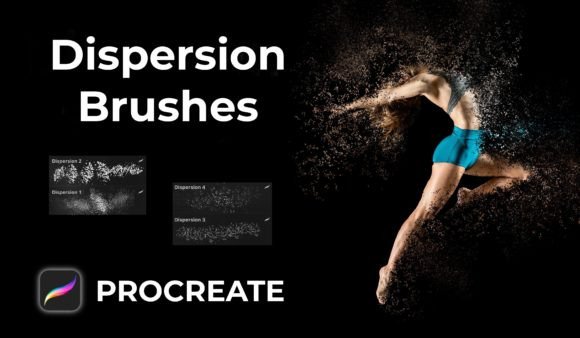
The specific Dispersion Brushes - Procreate set mentioned here consists of four unique configurations. Each brush in this set likely offers a different grain size, flow rate, or opacity curve. This variety allows an artist to simulate different granularities of physical media, from fine dust to coarse sand. The core value proposition of these brushes lies in their ability to introduce "imperfection" into a digital canvas, which is often the key to achieving a hand-drawn aesthetic.
Why Artists Seek Dispersion Textures
Artists typically research and evaluate dispersion brushes when they encounter a specific visual bottleneck: the "digital sheen." Standard brushes can sometimes make artwork appear too clean, smooth, or uniform. When an illustrator wants to convey grit, atmosphere, or the tactile feel of paper, dispersion becomes a necessary tool.
There are several practical reasons why someone might be interested in this specific set of four brushes:
- Texture Simulation: They provide a quick way to add surface noise to skin tones, landscapes, or backgrounds without manually painting every dot.
- Speed and Efficiency: Creating complex textures from scratch using standard brushes is time-consuming. Pre-configured dispersion brushes allow for rapid layering of depth.
- Consistency: Using a dedicated brushset ensures that the texture remains consistent across different layers and projects, maintaining a cohesive visual language.
- Learning Curve: Many artists struggle to configure the scatter settings in Procreate's native engine. A pre-made set removes the technical barrier, allowing the user to focus on composition.
Benefits and Tradeoffs of the Four-Brush Set
Evaluating the Dispersion Brushes - Procreate requires looking at both the advantages and the potential compromises involved in using a third-party asset.
The Benefits
The primary advantage of this specific set is its curation. With only four brushes, the collection avoids the paralysis of choice that comes with massive libraries containing hundreds of options. Each brush serves a specific function, likely covering light shading, heavy texture, blending, and detailing. Furthermore, because these are distributed as a .brushset file, installation is seamless. Users simply tap the file, and it loads directly into the Procreate interface, requiring no conversion or complex import procedures.
Another significant benefit is the inclusion of educational material. The accompanying PDF tutorial provides insight into how the creator utilizes these tools. This is valuable not just for learning the specific settings of the brushes, but for understanding the technique behind them—such as how to build up tone gradually or how to combine dispersion with other brush types for a mixed-media effect.
The Tradeoffs
The most critical limitation to consider is platform exclusivity. These brushes work ONLY with the Procreate app. If an artist uses Photoshop on an iPad, Clip Studio Paint, or works on desktop software like Krita or Corel Painter, these files will be incompatible. There is no universal format for brush engines; what works in Procreate cannot be transferred elsewhere.
Additionally, while the set includes four brushes, it may not cover every scenario an artist encounters. A four-brush set is a starting point, not a complete replacement for a full toolkit. Artists who require highly specialized textures for niche styles (such as hyper-realism or specific ink washes) might find the range insufficient after the initial novelty wears off.
Situations Where This Set Is a Strong Fit
This brushset is an excellent fit for artists who are already committed to the Procreate ecosystem and are looking to expand their textural vocabulary. It is particularly useful for:
- Concept Artists: Those who need to quickly block out environments with atmospheric depth and rough textures.
- Illustrators Seeking Organic Styles: Creators aiming for a watercolor, charcoal, or pastel look without leaving the digital medium.
- Beginners to Intermediate Users: Artists who understand the basics of drawing but want to improve their rendering speed through better tool selection.
- Students Learning Technique: Individuals who will benefit significantly from the included PDF tutorial, using it as a case study for how professional artists approach texture.
If your workflow involves frequent switching between devices or applications, this set may not be ideal due to its exclusivity. However, for those whose primary creative output happens on an iPad within Procreate, the integration is immediate and effective.
When Alternatives May Be Worth Considering
While the Dispersion Brushes - Procreate offer clear value, there are scenarios where exploring alternatives is prudent. If you are working on a commercial project that requires strict brand guidelines regarding file formats and cross-platform compatibility, relying on a proprietary .brushset file could complicate your pipeline.
Furthermore, if you prefer total control over your tools, building your own dispersion brushes within Procreate might be more satisfying. The app's native brush studio allows for deep customization of scatter, rotation, and wetness. While this requires a steeper learning curve, it ensures that your tools are perfectly tailored to your specific hand movements and artistic intent, rather than adapting to someone else's configuration.
Finally, if you do not use an iPad, purchasing or downloading this set would be futile. In such cases, investing in software-specific brushes for your chosen application (such as .abr files for Photoshop or .spp files for Clip Studio Paint) is the logical alternative.
Practical Decision-Making Insights
Before deciding whether to integrate this set into your workflow, consider the following factors:
- Verify Compatibility: Ensure you are running a version of Procreate that supports custom brushsets. While backward compatibility is generally good, checking the system requirements prevents frustration.
- Review the Tutorial First: Since the download includes a PDF tutorial, examine the preview or description of the guide. If the techniques shown align with your current learning goals, the value of the purchase increases significantly beyond the brushes themselves.
- Test the Workflow: Once installed, spend time testing the four brushes on a blank canvas. Do they respond well to your stylus pressure? Does the dispersion pattern match the texture you envision? Sometimes a brush feels right in theory but awkward in practice.
- Assess Long-Term Utility: Ask yourself if these four brushes will solve a recurring problem in your art. If you frequently struggle with adding texture or creating soft transitions, these tools are likely a high-value addition. If you rarely need dispersion effects, they may gather digital dust.
Ultimately, the decision to use Dispersion Brushes - Procreate should be driven by how well they facilitate your creative expression. They are not a magic solution that improves art automatically; rather, they are instruments that, when paired with skill and the guidance found in the included tutorial, can streamline the process of creating rich, textured digital illustrations.